|
Among the over 30 European Cultural Routes acknowledged by the Council of Europe, the “Phoenicians’ Route”, including the whole Mediterranean area and all the countries overlooking it, is considered as the Route of the Interculture. On the track of the Phoenicians’ Routes you’ll get to the the Americas and from the North European seas to the African ones. The exploitation of the heritage of each participating site constitutes the aim of the Route. This final goal can be achieved only if towns, partners and institutions cooperate to explore new paths through the relationship between man and his surrounding natural and cultural heritage as well as through pedagogical and touristic models meeting today’s needs of culture sharing.
The cultural heritage inherited by Phoenicians and Punics is remarkable, both from the archaeological importance as well as from the discoveries they handed down to us: let’s mention, for example the alphabet and the astronomy, the navigation techniques. However, let’s consider how, after 3000 years, Phoenicians still represent a model for their ability of adaptation, for their craving for knowledge and exchange with those populations then living by the Mediterranean shores, cooperating with each other.Their towns were ports of call along a complete Mediterranean journey, where objects, knowledges and experiences were exchanged. When they started to fight against other strong civilizations, such as the Greeks and the Romans, they showed how skilful they also were in self-defence and, though defeated, they showed to be the moral winners, so influencing the culture both of who had overcome them in the battlefield and of new ages to come. In order to tell about all this, the Phoenicians’ Route is to be considered a Route of knowledge as well as of experience. It suggests travels for study, leisure or culture sharing among Mediterranean peoples and countries, which today act as conveyors of all their past civilizations, and so demonstrating how the past is a valuable tool to work out our future. The European Cultural Itinerary “The Phoenicians’ Route” was first introduced by the Italian Government in 1994. After the abolition of the Tourism Ministery, thanks to the formation of the international Association from the concerned towns, the Itinerary has been started up its activities with organized method. Following to the visit of M.T.Penette, Director of the European Institute of Cultural itineraries, a Body belonging to the Council of Europe (in charge of the monitoring and the acknowledgment of the European Cultural Itineraries), the Association “Phoenicians’ Route” was founded in July 2004, with Marsala as its official site. On December 4 2004 the Convention between the Association and the European Institute was undersigned, and it decreed the restarting of the Phoenicians’ Route activities.
The cultural landscape in the Mediterranean area The landscape is a complex entity, a mixture of places and objects: as a whole it surrounds us and at the same time it is the most articulated cultural Heritage. Including the landscape as one of the different kinds of cultural Heritage and considering it as worth of interest and protection is a quite recent breakthrough and it’s due, above all, to the European Convention of the landscape undersigned by the EU countries in 2000 in Florence. The landscape, and the natural landscape notably, “is necessary for man and it shows how man is in step with nature”. (Socrates).
We can’t separate our experience of the landscape from being included ourselves in that landscape as a part of it. Whenever we look at a landscape we become a part of it. The landscape is always a cultural matter, and any part of the land needs to be investigated in order to draw evidence of its past history. Referring to the landscape also implies nature understanding , the cooperation of man and nature as well as the research of the original features of places (genius loci). (Maria Chiara Pozzana).
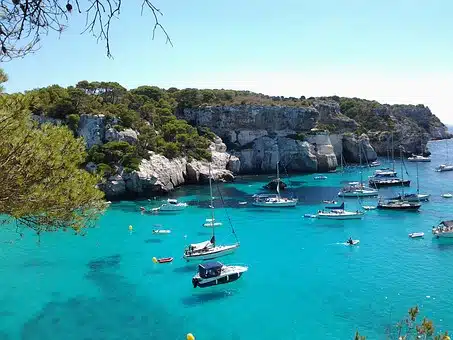
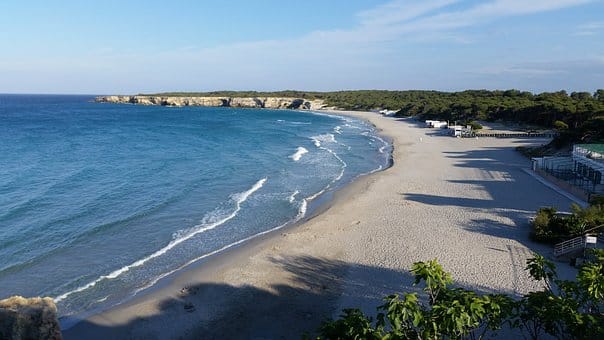
As for the Mediterranean, the matter is even more complex, because “the Mediterranean is many things at the same time. Not one single landscape but several landscapes. Not one single sea but several seas. Not one single civilization, but many civilizations overlaying one another. Travelling across the Mediterranean means plunging into the depth of centuries. It means coming across very ancient things, but still alive, beside very new ones… All this is justified by the Mediterranean being a very old crossroads. Into the Mediterranean a blending of things and events has been flowing for ages, which has been enriching its history, and even its vegetation. This latter is thought to be originally Mediterranean but only the olive tree, the vine and the wheat were actually authoctonous and very early grown there. Any other kind of plant was grown elsewhere, far away from this sea. However, such difference in plants origin, hasn’t prevented them from becoming an only feature of the Mediterranean landscape: citrus fruits from the Far East; cactus,agaves, American prickly pears; Australian gum-trees; Persian cypresses; Peruvian tomatoes; aubergines from India. “In its physical and human landscape, the Mediterranean gives a consistent image of itself, as a system where everything blends and then brings itself together again in an original unity. How to explain such unity, such profoundity of the Mediterranean? We can’t do that unless we consider them as a whole.” (Fernand Braudel). |